
 Add as a Google preferred source


When life feels overwhelming, it's easy to slip into survival mode. The to-do list grows, things fall through the cracks, and suddenly everything feels like too much.

The good news? You can reset. You can rein in the chaos and feel calm and in control again.
No matter how organized I try to be, chaos always finds a way back in-dirty dishes pile up, the house becomes a mess, the kids push boundaries, and I forget something important.
When I realize I’m floundering, I follow a 6-step system that helps me reset. It’s not complicated, but it is powerful.
This simple approach is how I regularly take back control of my life-and it can work for you too.
The 6-Step System to Get Your Life Under Control
You don't need a full weekend or a personal assistant-just one hour, a pen, and a willingness to follow the steps.

Pro Tip: Don't skip steps. This system works because each step builds on the one before.
1. Identify Your Priorities
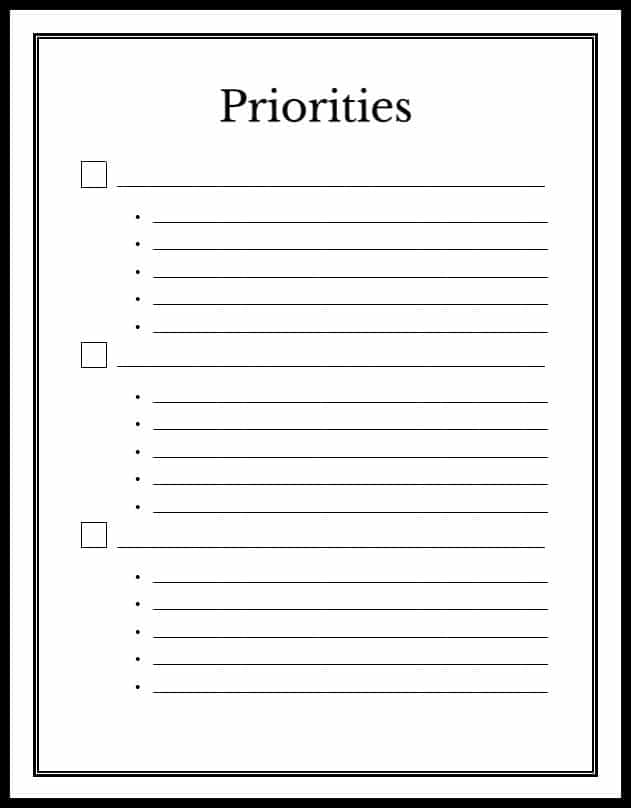
Start with what matters most. On a blank piece of paper (or using the free worksheet below), write down the broad categories that are important to you.
Examples might include:
- Family
- Health
- Career
- Friendships
- Home
- Spirituality
- Recreation
- Community
- Wealth
- Travel
- Education
- Influence
Don't overthink it. You're not being graded-this is just for you.
2. List Your Current Activities
Now think about what you're actually doing in your day-to-day life.
Under each of your priority categories, jot down the key tasks or activities that fall under them. Include anything that takes at least an hour per month.
For example:
- Recreation: Monthly book club, TV time, mani/pedis
- Spirituality: Sunday service, Bible study, daily prayer
- Health: Stretching, 3-4 workouts per week, healthy meal prep
- Home: Cooking, cleaning, laundry, yard work
This step is tedious, but it's eye-opening-and necessary.
3. Order Your Priorities
Next, rank your priorities in order of importance. Put a "1" next to what matters most, a "2" next to the next most important, and so on.
This step reveals something powerful: the gap between what you care about and how you're spending your time.
For example, I always rank family as my #1-but during one review, I realized community volunteering was eating up more of my time than being present with my kids or caring for my health.
When you can see these misalignments clearly, it's easier to make confident changes.
4. Consolidate Tasks
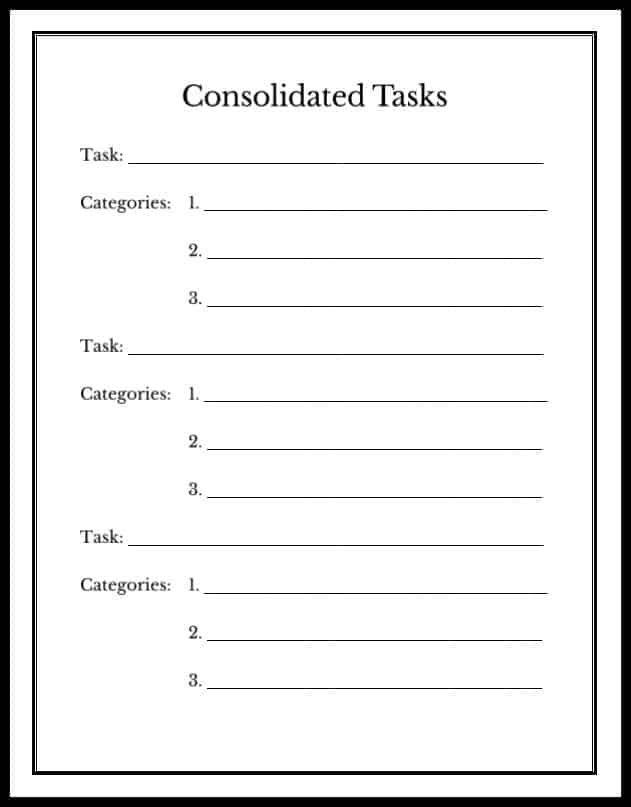
Now look for ways to double up-aka do more than one thing at a time in a meaningful way.
Ask yourself:
- Can I combine priorities?
- Can I involve my family or friends in something I'd normally do alone?
Examples:
- Cook and clean up dinner together as a family (house + family time)
- Go on walks or bike rides with your kids (health + quality time)
- Watch your favorite show while doing my couch potato workout (health + recreation)
- Host a tennis match instead of dinner for girls' night (social + exercise)
Look for small shifts that make a big impact.
5. Identify Unnecessary Tasks
This is the game-changer.
Now that you've clarified your priorities and consolidated where possible, it's time to let go of what's not serving you.
Start with the lowest-ranked priorities. Are you spending a lot of time here?
During one review, I realized I was spending hours each week volunteering at my kids' school-even though community wasn't a top priority for me at that moment. I cut back, recruited help, and reclaimed hours for my health and family.
If you've made commitments you can't break, that's okay. Just stop adding new ones.
6. Map Out Your Plan
You've lightened your load and reclaimed your time-now it's time to lock in your progress.
If you use a planner:
- Schedule your essential activities into your week/month.
- Create a weekly plan around your realigned priorities.
- Add to-dos to eliminate or delegate the low-priority tasks still hanging around.
If you're not using a planner yet, start simple:
- Use a dry-erase calendar on the fridge
- Or a white board you'll see daily
📌 Visual reminders = accountability + motivation.
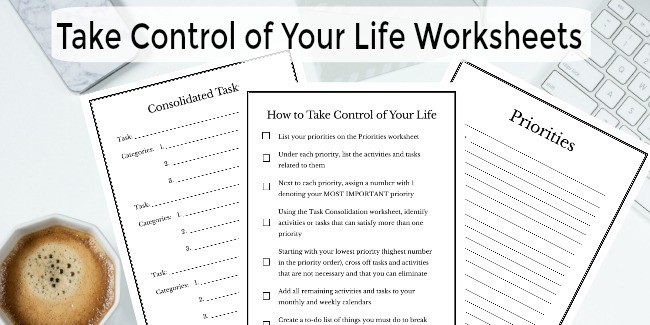
Free Worksheets to Help You Reset
While I usually just scratch things out on notebook paper, I know many people prefer structured prompts. So I created these simple printables to help you follow this system.
Click to download the full set or just the pages you need:
Or choose individual worksheets:
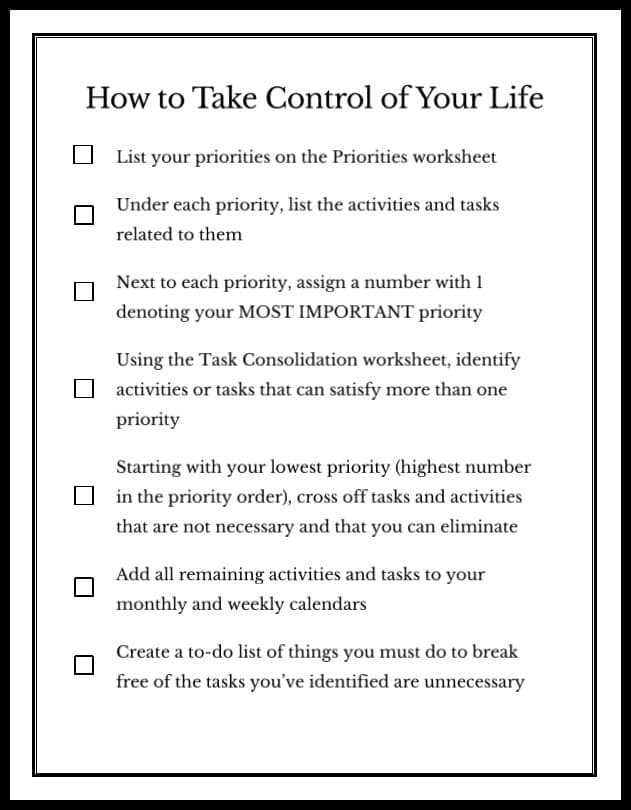
How to Take Control of Your Life - Instructions
Want More Tools to Stay on Track?
Once your life is back under control, it helps to have systems to keep it that way. These resources can help:
You don't have to stay stuck in the chaos.
Take one hour, work through this system, and start fresh-on your terms.

Let me know in the comments: What's the first thing you're cutting from your schedule?