
 Add as a Google preferred source




Yes, AI can help with homework without taking away the learning, when the AI is built to guide your child with questions. And, it’s important that parents stay involved, too. That’s why I was interested to check out Lincoln AI Learning Coach. I personally tested Learning Coach in several scenarios: algebra, a history essay, a book report, fractions, and a grammar worksheet.I came away seeing a real place for AI at the homework table, plus one area where I’d want you sitting right there.

This post is sponsored by Lincoln Learning Solutions. I received complimentary access to Lincoln AI Learning Coach and am being compensated for sharing my experience. The testing and opinions below are my own.
Why the Kind of AI Your Child Uses Matters
Not all AI is built for learning. A general-purpose AI tool is designed to answer whatever you ask. Ask it for a finished essay or the answer to problem 12, and that’s usually what you get.
Lincoln AI Learning Coach comes at homework from a different direction.
Lincoln Learning Solutions is an education and curriculum company, and its Learning Coach is built on educator-developed curriculum and an approach called the Socratic method. In everyday terms, that means it asks your child questions that help them reason through a problem instead of simply telling them the answer.
That difference is the whole point. The struggle of working something out is where the learning happens, so the help we give our kids should keep them doing that work.
It’s hard to watch your child struggle with homework when you know help is sitting right there on a screen. We want to help when our kids are frustrated. We also want them to learn that being confused doesn’t mean they’re incapable, and that they can work through something even when the answer isn’t obvious.
Adding AI to the mix brings up a whole new set of questions. If a tool can finish the assignment in seconds, why would a child keep trying? How do we teach them to use something so helpful without becoming dependent on it? And how do we explain all of this when we’re still figuring it out ourselves?
I don’t want our kids to be afraid of AI. I want them to learn how to use it thoughtfully. But I also don’t want us to make their lives so easy now that we take away the chance to build the thinking skills they’ll need as adults.
Those were the questions I brought to my tests of Lincoln AI Learning Coach. Here’s what worked well, where I’d stay close, and the ground rules I’d set for any AI your kids use.
To test the learning coach, I set up one student profile with a made up name and used it for everything, from algebra and a history essay to a book report and a grammar worksheet, so I could see how it handles homework for different ages. This is my experience providing a parent’s hands-on look at the tool, not a report on a child’s grades.

What Happened When I Gave It a Wrong Answer on Purpose
Before recommending anything to you, I wanted to try it myself. Being able to answer a homework question wasn’t enough to convince me. I wanted to see what happens when a student doesn’t understand.
I used this equation:
x² − 5x + 6 = 0
I used the math input screen.
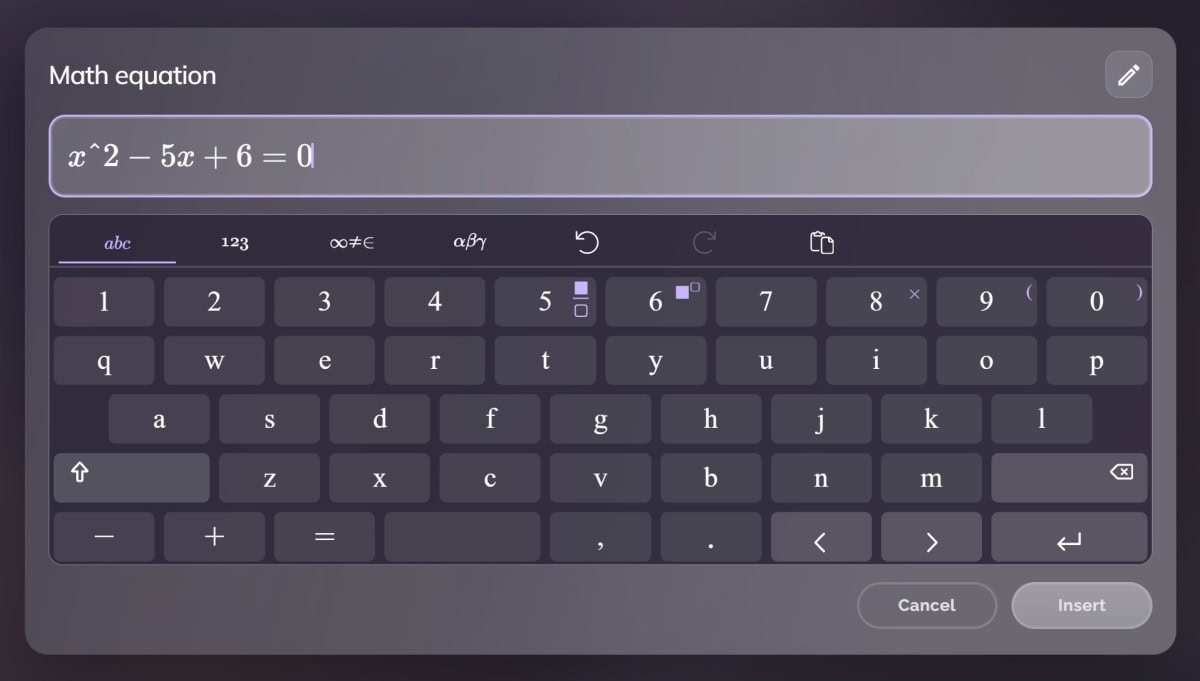
I factored it correctly as (x − 2)(x − 3) = 0, then deliberately said the answers were negative 2 and negative 3. The correct answers are positive 2 and positive 3.
If algebra isn’t your favorite subject, stay with me. The important part is how the coach responded to the mistake.
First, it told me I had factored the equation correctly. (I love that it started with what I got right.) Then it asked what value would make the first factor equal zero.
I pushed back. I said I still thought it was negative 2 because that was the number in the parentheses.
So the coach tried a more specific explanation. It showed me that putting negative 2 into x − 2 gives negative 4, which doesn’t equal zero. Then it asked:
“If you try positive two instead, what is two minus two?”
That was a small enough step for me to take on my own. I could see why my first answer didn’t work and how to check a different one.
This is the exchange I’d want you to see before deciding what you think about AI homework help. The coach explained enough to get me unstuck, but I still did the figuring out. It responded to the specific mistake I was making instead of giving me a finished solution to copy.
Then It Gave Me a Problem to Practice
Once I worked through the signs, I asked for another problem. The coach gave me:
x² + 5x + 6 = 0
It looks almost identical, but changing that middle sign matters. This time, negative 2 and negative 3 really are the answers.
I loved that choice. It gave me a chance to use what I’d just learned on a problem that was slightly different. As a parent, that’s the real test: can your child do something with the explanation once they’ve heard it?
It Helped Me Think Through a History Essay, Too
I also tried Homework Helper with a history assignment: a 1,000-word essay on the causes of the American Revolution, with three sources, and only 20 minutes to work on it. (We’ve all had a kid in that spot.)
It prompted me to upload a worksheet, but it was happy to take the assignment when I typed it in. Instead of writing the essay for me, it asked which causes I was considering and helped me think through how taxes and the Boston Tea Party connected.
When I asked for a source, it pointed me to the Library of Congress as a place to look. Finding and reading the actual document was still my job, which is exactly how it should be. That’s also a great moment to loop in a teacher or school librarian.
I Ran More Tests With Everyday Homework
That first round went so well that I wanted to try the kind of homework that comes home in a lot of backpacks: a book report, a grammar worksheet and a fractions problem. Two of them were favorites. The third is where I’d want you sitting close by.
A Book Report: It Asked What I Thought
When I asked for help with a book report, the coach gave me a very brief summary of the book and then asked me what I thought the book was about. I gave the wrong answer, and it gently corrected me.
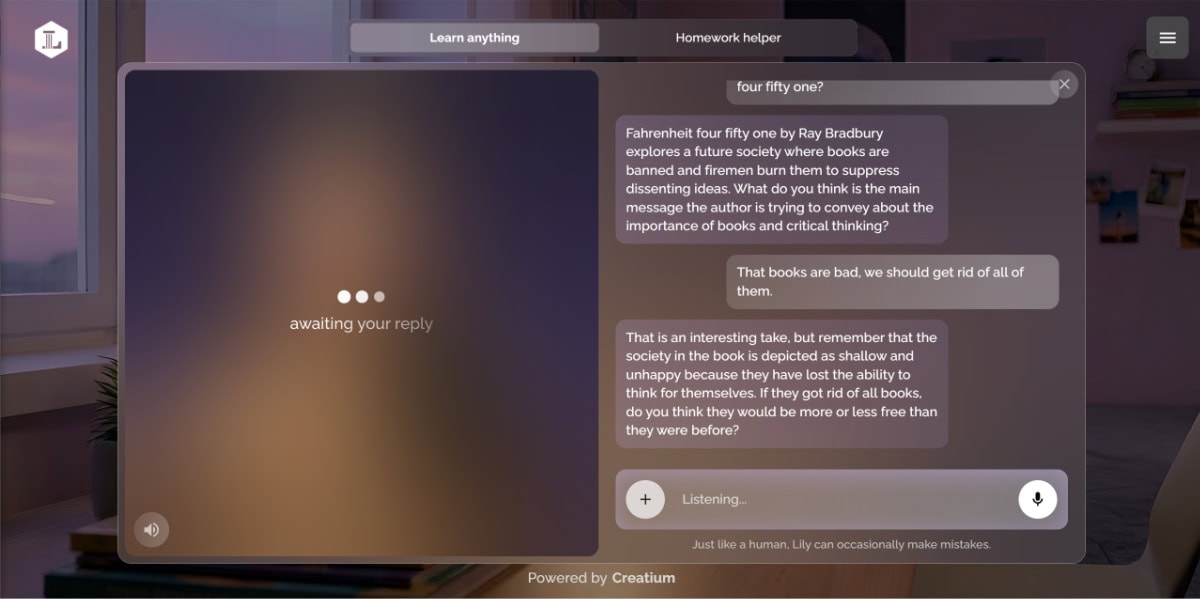
That’s the balance I’d want for my own kids. It gave enough to get me started, but it still wanted to hear my thinking, and it corrected me without making me feel silly.
A Grammar Worksheet: It Taught Me the Rule
Next, I uploaded a capitalization and grammar worksheet I downloaded from a free education website. I picked it on purpose because this is the kind of homework where parents often struggle to help without just telling their child which words to capitalize.
The coach didn’t do that. It asked me which words I thought should be capitalized. I found one correctly, then said I couldn’t find any others.
Instead of pointing out the answers, it called out the proper nouns in the worksheet, written just as they appeared, and explained the rule for capitalizing proper names. Then it asked me how I would rewrite them.
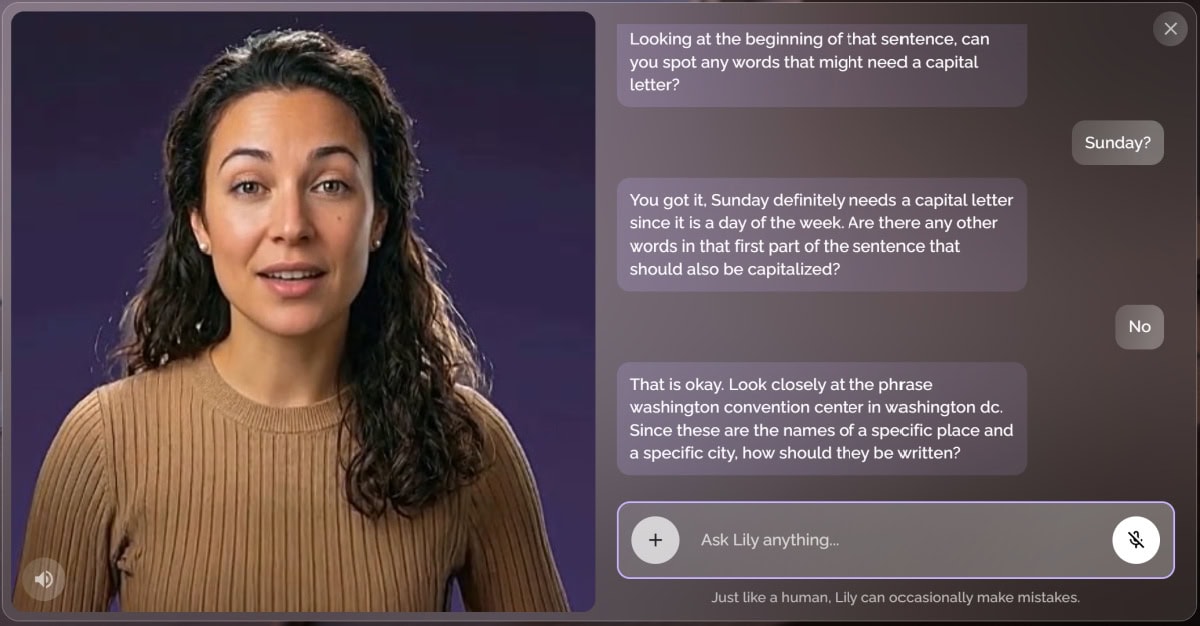
It never just gave me the answer. It made me understand the rule first.
This is a great way to use it with your kids. Snap a picture of the actual worksheet and work through it together.
Fractions: Where I’d Stay Close
I also tried a fractions problem: ¾ + ½.
The coach started by asking what we could use as a denominator that might be a common multiple. I answered 2, which isn’t the easy choice here. The simplest common denominator is 4.
Instead of steering me toward 4, it went along with my answer and said we could multiply both numerators by ½. That’s technically correct, but it turned a simple problem into a much harder one. It did come around in the end, but it took a longer road to get there.
I want to be straight with you about this, because math is where a lot of us need homework help the most. If your child is already struggling with fractions, that detour could add confusion instead of clearing it up.
My guess is it was trying to work with my answer instead of simply telling me I was wrong, which is the whole idea behind guiding with questions. That’s a good instinct most of the time. With math, it means you want to be nearby to notice when a path is getting harder than it needs to be.
How to Help Your Kids Use AI Responsibly
Here’s the simplest way I can put it: AI should be a tutor sitting next to your child, not a ghostwriter doing the work for them. These are the ground rules I’d set for any AI tool your kids use.
- Check the teacher’s rules first. Some assignments welcome AI help and some don’t. A tool can be helpful and still be the wrong fit for a particular assignment.
- Try it first, then ask for help. Even an unfinished attempt gives your child something specific to ask about, and it keeps them doing the thinking.
- Ask for explanations, not answers. “I don’t understand why this number is negative” is a much better question than “Do this for me.”
- Double-check what AI says. AI can be wrong, so teach your kids to check. In my test, the coach showed me how to check an answer by plugging the number back in. That’s a habit worth building for any answer, from any source.
- Keep personal details out of the chat. Teach your kids not to type in their full name, address, school, or other private information. If they upload a worksheet, use one without their name on it. And read the privacy policy of any AI tool before your family signs up.
- Stay close, especially at first. Homework at the kitchen table means you can see how the conversation is going and step in when your child gets frustrated.
- Have them teach it back. When they finish, ask your child to explain the answer to you. If they can explain it, they learned it.
- Know when to ask a person. If the conversation is going in circles, an explanation is getting more confusing, or the steps don’t match what they learned in class, it’s time to check with you or the teacher.
If Your Child Struggles With Math, Here’s How I’d Use It
Math is still where I’d use it, with you as part of the team. These are the guardrails I’d add for math homework.
- Sit with them for math, especially at first. You don’t have to know the answer. You’re watching for the moment an explanation stops making sense.
- Keep the class notes or textbook nearby. If the steps on the screen look different or harder than what the teacher showed, pause and compare.
- Teach your child to say “That seems harder. Is there a simpler way?” Kids need to know it’s okay to question the helper, whether it’s an app or a person.
- Watch for frustration. If a problem is getting more confusing instead of less, take a break and check with the teacher.
- Check the final answer together. Plugging an answer back in, the way the coach showed me with the algebra problem, is a habit worth building every time.
How I’d Introduce Learning Coach to Your Child
I’d start by sitting together for one assignment and explaining what you’re trying to do. Something like: “You can ask for help understanding this. I still want you to be able to explain how you got your answer.”
Then try it on a real concept your child is stuck on, with you nearby. Encourage them to say so when an explanation doesn’t click. In my test, pushing back led to a clearer explanation, and kids should know they can always ask again. When they get it, ask for a similar problem so they can try it on their own.
If homework time is already a daily battle, it helps to decide when and where it happens before adding a new tool. My kids daily routine printable gives you a simple place to lay out that after-school routine together.
Is Lincoln AI Learning Coach Worth Trying?
If you want AI help that keeps your child doing the thinking, I think it’s worth a try. What won me over was how it handled my algebra mistake: it found the exact spot where I went wrong, asked one small question at a time, and then gave me a chance to practice. The book report and grammar worksheet were favorites too.
My one caution is math with a child who’s already struggling. In my fractions test, it took a harder path before it got back on track. So for math, I’d use it with you nearby and the class notes on the table.
It’s also a real help for us parents. If you don’t remember how to factor an equation (no judgment here), you can sit beside your child while the coach walks them through it, and you might pick up something yourself.
As you try it, watch your child as much as the screen. Are they participating? Can they explain something they couldn’t before? Those are the signs it’s working for your family.
Lincoln offers a free trial of Learning Coach. If you subscribe before May 31st, 2027, use code COACH15 to get 15% off. Review the trial and subscription terms when you sign up so you know what happens when the trial ends.
You can also watch Lincoln’s Learning Coach demonstration before you try it.
We spend a lot of years helping our kids learn to do things without us. Homework is one small part of that. The right AI tool can help your child understand a little more and become a little more capable, even if finishing the assignment takes longer than asking for the answer.
I hope this helps!
A Few More Questions About AI Homework Help
Is using AI for homework cheating?
It depends on the assignment’s rules and how your child uses it. Check with the teacher first. Getting help understanding a concept is very different from turning in an answer AI wrote, but the teacher’s expectations always come first.
Will Lincoln AI Learning Coach just give my child the answers?
It’s designed to guide students with questions instead. In my math test, it explained why my answer didn’t work and walked me through the next step with a question, so I still had to work it out. Sit with your child the first few times so you can see how it works for them.
Is AI safe for kids to use for homework?
Any AI tool works best with a parent involved. Read the tool’s privacy policy before signing up, teach your kids to keep personal details out of the chat, and stay nearby while they learn how to use it.
How do I teach my kids to use AI responsibly?
Start with a few simple rules: follow the teacher’s guidelines, try the problem first, ask for explanations instead of answers, double-check what AI says, and be able to explain the answer yourself afterward.
Is Lincoln AI Learning Coach good for kids who struggle with math?
It can help, with you nearby. In my tests, it handled a sign mistake in algebra really well. On a fractions problem, it went along with a harder approach before getting back on track. If your child already finds math hard, sit with them and compare the steps to what they learned in class.
Do you have to upload a worksheet?
No. Homework Helper asked for a worksheet upload at first, but I was able to type my history assignment in instead. Uploading does work well, though. My grammar worksheet session was one of my favorites.
Can it replace a teacher or tutor?
I think of it as extra support at home, especially on nights when you’re not sure how to explain a concept yourself. Teachers and tutors are still the people to go to when your child needs more help.